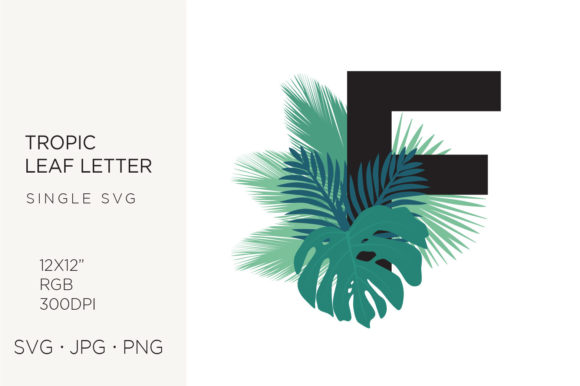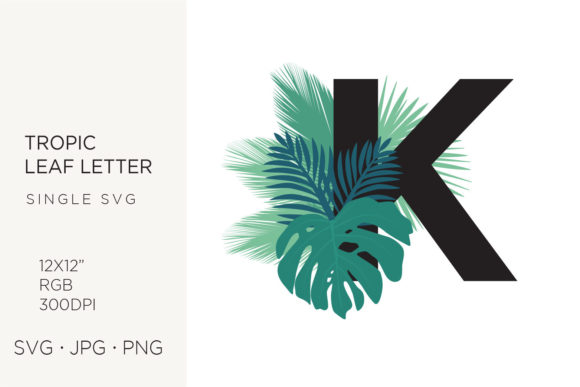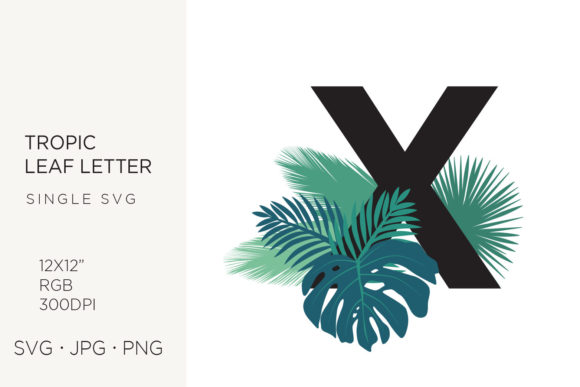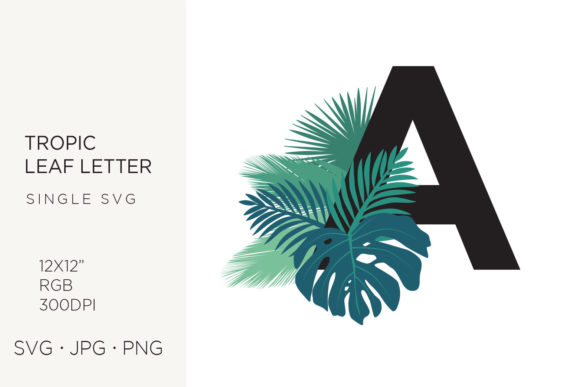
Tropic Leaves, Palm Leaf Letter H: Tropical Icons & Graphics
As a graphic designer who’s built brand identities for handmade businesses, seasonal Etsy launches, and local wellness studios, I recently pulled Tropic Leaves, Palm Leaf Letter H into a live project — a summer citrus-infused candle line launching at a regional farmers’ market. My goal? To test whether this asset delivers visual cohesion, scalability, and emotional resonance — not just decorative flair.
A First Impression That Feels Intentional, Not Generic
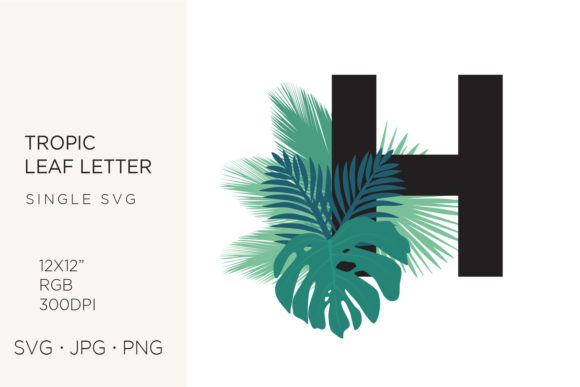
The moment I opened the SVG file, I noticed how the palm fronds wrap organically around the letterform — not forced, not symmetrical, but rhythmically asymmetrical, like real foliage catching wind. It avoids the stiff, clipart-like rigidity that undermines credibility in modern design. The curves are fluid but grounded; the leaf veins subtle but legible. This isn’t tropical cliché — it’s tropical character. It leans into organic modern design, with enough detail to feel hand-crafted but enough negative space to breathe in layout.
Where It Shines in Real Client Work
Tropic Leaves, Palm Leaf Letter H excels as a thematic anchor — especially when you’re building a cohesive visual language across touchpoints. In my candle project, it became the hero icon on product labels, a supporting motif in Instagram carousel graphics, and a subtle watermark on printable gift tags. Because it’s vector-based and built in Adobe Illustrator, scaling from 1” sticker size to a 48” trade show banner introduced zero pixelation or distortion.
- Product mockups: Works beautifully on ceramic mug renders and kraft paper label templates — the green tones pop against natural textures without overwhelming them.
- Social media graphics: Serves as a focal point in Canva templates and Pinterest pins, reinforcing seasonal messaging (e.g., “Summer Citrus Collection”) without needing explanatory text.
- Cricut projects & sublimation design: The clean SVG paths cut precisely on vinyl and transfer crisply onto tumblers and tote bags — no jagged edges or stray anchor points.
- Print-on-demand & Etsy product visuals: Paired with soft serif typography, it elevates digital product mockups, helping handmade businesses compete visually with larger brands.
- Editorial and blog visuals: Used as a decorative accent beside recipe headers or travel journal excerpts, it adds warmth and context without competing with body copy.
Where to Use It Thoughtfully — Not Automatically
This isn’t a universal drop-in solution. Its lushness demands intention. I avoided placing Tropic Leaves, Palm Leaf Letter H in tight spaces — like small app icons or favicon-sized assets — where leaf details blurred into noise. On busy backgrounds (e.g., textured photos or patterned substrates), I added a subtle white stroke or light drop shadow to preserve readability.
It also doesn’t suit minimalist corporate branding, law firm websites, or medical tech interfaces — contexts where clarity, neutrality, and restrained hierarchy take priority. Likewise, pairing it with ultra-thin sans serifs or stark monoline fonts created visual tension rather than harmony. It pairs best with warm, humanist typefaces — think rounded sans serifs, gentle scripts, or friendly display fonts — never rigid geometric ones.
What It Does for Brand Perception
In client-facing work, Tropic Leaves, Palm Leaf Letter H does more than decorate — it signals mood, values, and audience alignment. For a small business owner selling botanical skincare, it subtly communicates natural ingredients, artisan care, and sensory appeal. That emotional shorthand builds recognition faster than text alone. But only if used consistently: once on a label, repeated on packaging, echoed in email headers — that’s how it becomes part of a brand identity, not just a one-off graphic design asset.
I’ve seen clients hesitate before investing in custom lettering. This asset offers a middle ground: professional quality, commercial flexibility, and expressive personality — all without the 3–4 week turnaround of bespoke illustration.
Designer Notes You Can’t Skip Before Using It
Before locking it into a final layout, I always run these checks — especially for client deliverables:
- Test in black and white: Confirm the silhouette holds up. Some palm details fade when desaturated — this one retains strong shape integrity.
- Check contrast on light/dark backgrounds: The RGB color palette works well on off-white and charcoal, but avoid placing the default green directly over medium greens or muddy beiges.
- Preview at actual use sizes: Zoom out to 25% in Illustrator to simulate how it reads on mobile or small stickers.
- Place on real mockups — not just flat previews: I tested it on a matte-finish candle jar render and a linen tote bag photo. The organic lines softened naturally on texture, unlike harsh vector-only previews.
- Verify PNG transparency: The included PNG has clean alpha channels — no halos or anti-aliasing ghosts around leaf edges.
- Inspect SVG editability: All paths are ungrouped and labeled logically — easy to recolor, simplify, or isolate individual fronds for custom arrangements.
- Confirm commercial license: Yes — it permits use in client work, print-on-demand, and digital products, as long as you’re not reselling the file itself as a standalone design bundle.
Final Verdict: A Strategic Creative Asset, Not Just Clipart
Tropic Leaves, Palm Leaf Letter H earns its place in my working toolkit because it bridges aesthetics and utility. It’s not background filler — it’s a functional element that supports storytelling, strengthens visual hierarchy, and deepens audience connection. For designers crafting packaging design, social media graphics, or printable designs for small business branding, it’s a time-saving, mood-enhancing, commercially safe choice — provided you treat it like a thoughtful design decision, not a decorative afterthought.
If your next project evokes sunshine, slow living, coastal calm, or botanical joy — and you need a graphic design asset that feels both intentional and inviting — this is one tropical icon worth keeping open in your layers panel.